


 TRUPTI THAKUR
 #CyberSecurity #APISecurity #InformationSecurity #ISO27001 #RiskManagement #DataSecurity #CyberResilience
The API Trust Trap
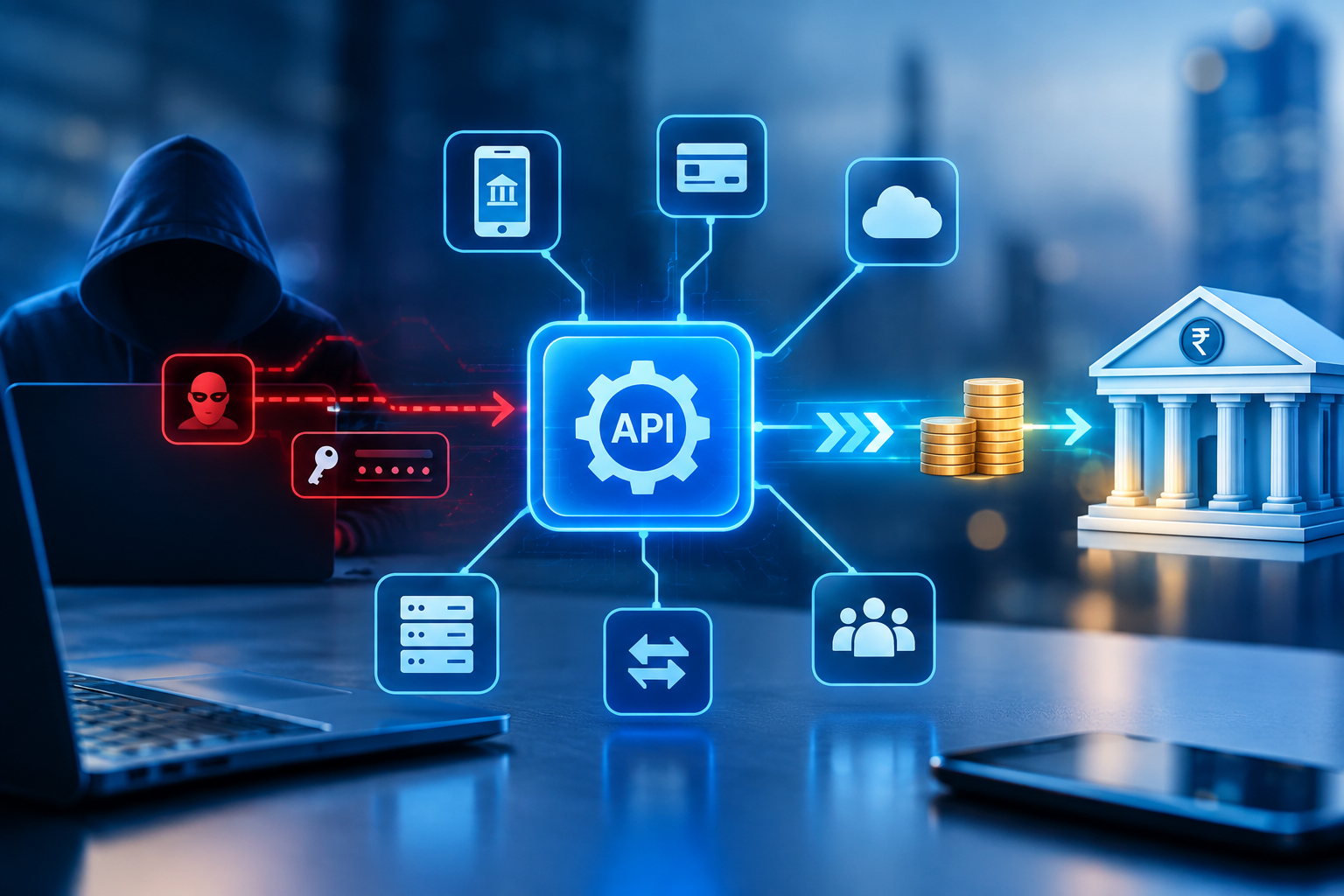
Introduction Modern financial services rely heavily on Application Programming Interfaces (APIs) to connect mobile banking applications, payment gateways, lending platforms, fintech systems, and third-party service providers. These integrations enable faster transactions, seamless customer experiences, and real-time data exchange. However, this connectivity also introduces a critical security challenge: an API can function exactly as designed and still expose an organization to a serious security incident. Attackers do not always need to exploit a software vulnerability or break through a firewall. Sometimes, they can misuse legitimate API functionality, manipulate transaction parameters, exploit excessive permissions, or abuse the trust established between interconnected systems. This is the API Trust Trap: when organizations trust the connection but fail to adequately validate the actions performed through it. How the API Trust Trap Works Consider a digital lending platform where a loan passes through customer verification, KYC checks, credit assessment, and final approval before funds are disbursed. An attacker who obtains valid API credentials may discover a way to call the payout API directly, bypassing the application workflow that normally ensures these checks have been completed. The API may accept the request because the credentials and source system appear legitimate, even when the underlying transaction has never been approved. This is not necessarily a failure of authentication alone. It is a failure to verify whether the requested financial action is authorized, valid, and supported by a legitimate business transaction. The risk is no longer theoretical. On 9 October 2026, India's CERT-In issued a critical advisory describing attacks against NBFCs, digital lending platforms, fintech companies, payment service providers, and wallet operators. The advisory identified stolen API credentials, exposed or outdated APIs, and direct invocation of fund-transfer endpoints among the attack methods. Why Traditional Security Controls May Not Be Enough Organizations often rely on firewalls, IP allowlisting, authentication tokens, and network restrictions to protect financial APIs. These controls remain important, but they cannot independently guarantee that every transaction is legitimate. The key weaknesses include: Excessive API privileges: Credentials allow more actions than the integration actually requires. Insecure credential management: API keys or tokens are exposed in source code, configuration files, or application environments. Incomplete transaction validation: A payout endpoint does not independently verify that the associated loan, beneficiary, and approval records are valid. Forgotten APIs: Deprecated, test, or unused endpoints remain accessible and inadequately protected. Insufficient monitoring: Unusual transaction volumes, repeated payout requests, and suspicious beneficiary changes are not detected quickly enough. The central lesson is simple: a trusted network location or valid credential should never be treated as proof that a financial transaction is authorized. How Organizations Can Strengthen API Security A robust API security strategy must protect the entire transaction lifecycle, from initial authentication to final settlement and reconciliation. 1. Strengthen identity and credential management Use short-lived tokens wherever feasible, enforce multi-factor authentication for administrative access, store secrets in approved vaults, rotate exposed credentials, and apply least-privilege permissions to every integration. 2. Validate every financial transaction Verify that every payout corresponds to an approved transaction and a valid beneficiary. Enforce transaction limits at the API or payment-processing layer, and require additional approval for high-risk transfers. 3. Implement real-time monitoring Detect unusual transaction frequency, high-value transfers, newly added beneficiaries, invalid reference identifiers, and suspicious API access patterns. Ensure alerts can trigger timely investigation or transaction holds. 4. Integrate API security into compliance and risk assessments Maintain an accurate API inventory, disable unused endpoints, conduct regular API vulnerability assessments and penetration testing, preserve centralized logs, and verify that remediation measures are effective. These measures align with the principal safeguards outlined in CERT-In's October 2026 advisory. The ISO 27001 Connection From an information security management perspective, API security should not be treated as an isolated technical responsibility. It should be incorporated into organizational risk assessments, supplier security reviews, access management, secure development, monitoring, and incident response. ISO/IEC 27001:2022 provides a framework for managing these risks systematically. Relevant Annex A controls include access control (5.15), identity management (5.16), authentication information (5.17), access rights (5.18), secure authentication (8.5), secure coding (8.28), and logging (8.15). Organizations should assess these controls against their actual API architecture, risk treatment decisions, and applicable requirements rather than assuming that certification alone guarantees secure financial transactions. Conclusion: Trust Must Be Verified at Every Transaction As financial ecosystems become more interconnected, the security of an API cannot depend solely on whether a request originates from a recognized system or carries valid credentials. The real question is whether the requested action is authorized, the transaction is legitimate, and the supporting controls remain effective at the moment the action is executed. The future of financial API security lies in moving beyond trusted connections toward continuously verified transactions. For fintech companies, banks, NBFCs, and digital lending platforms, the priority should be clear: authenticate the caller, validate the business purpose, enforce transaction-level controls, and monitor every critical action. Because in financial cybersecurity, a request can be technically valid and still be fraudulent.