

 TRUPTI THAKUR
 #Cybersecurity #AISecurity #InformationSecurity #DataSecurity #IdentitySecurity #AccessControl #LeastPrivilege #AIAgents #CloudSecurity #ZeroTrust #CyberRisk #SecurityGovernance
The AI Permission Drift
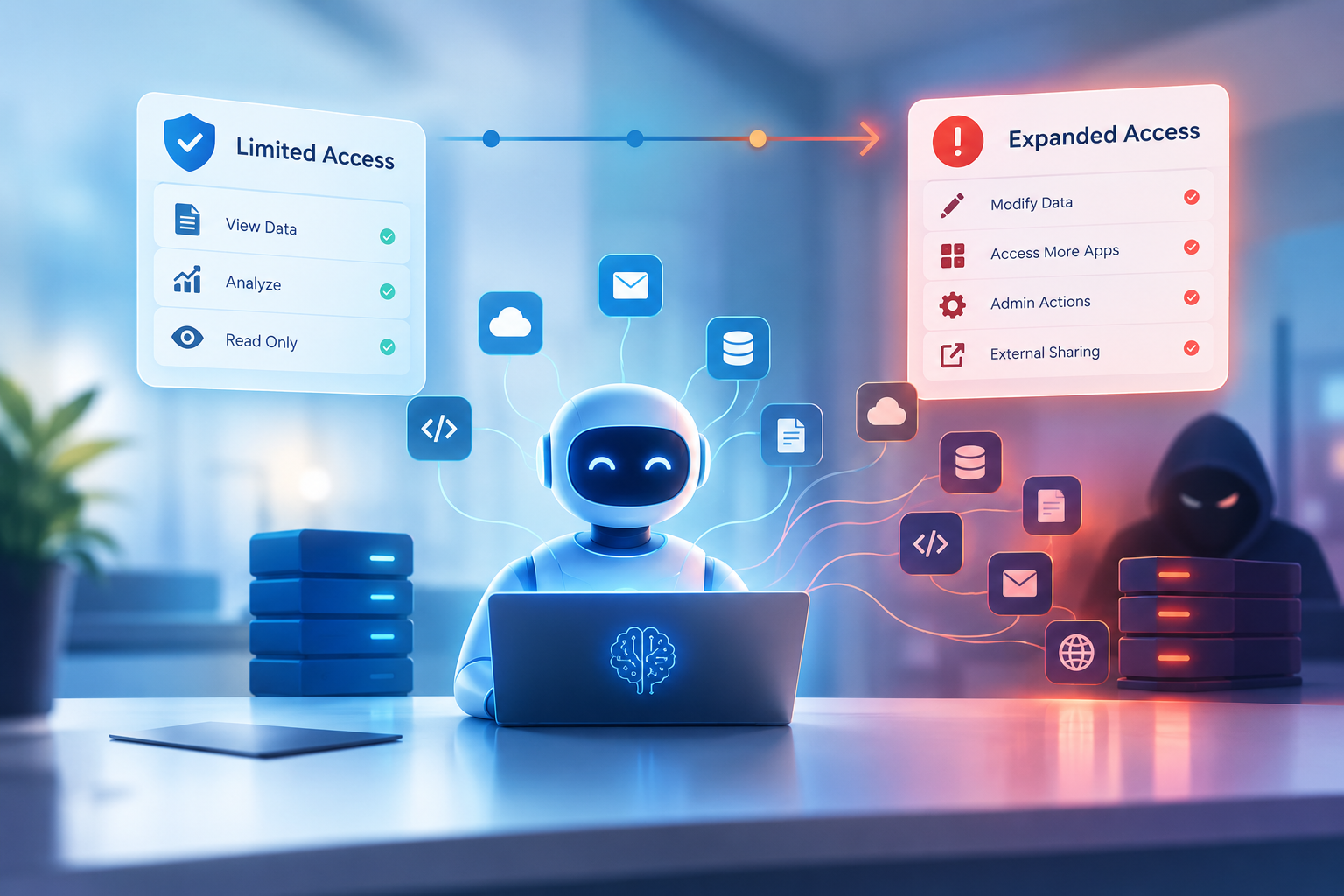
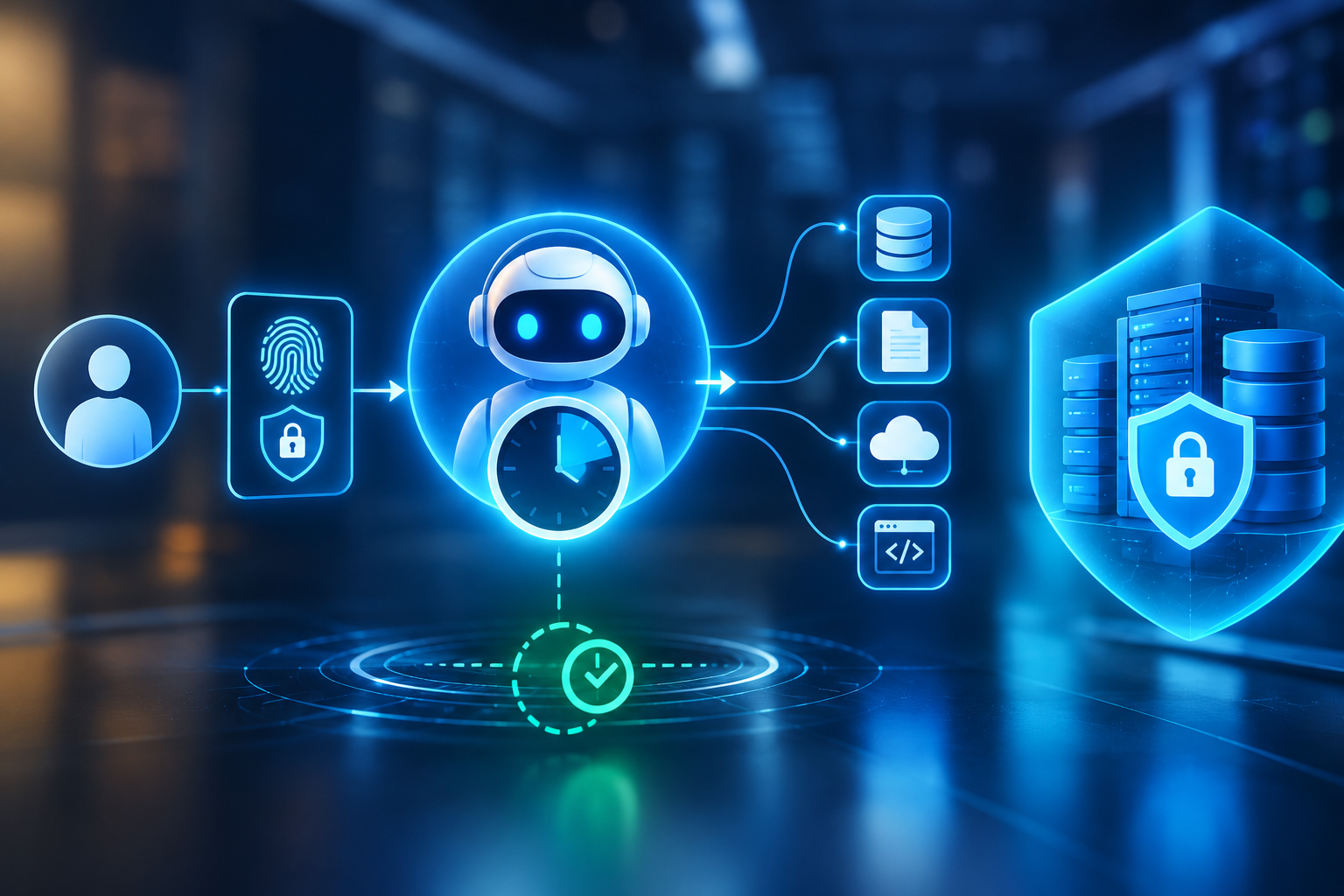
Organizations have spent years building least-privilege access controls for employees, applications, and service accounts. But a new access challenge is emerging with the rapid adoption of AI. AI systems are no longer limited to answering questions. AI agents can read emails, access documents, query databases, interact with APIs, create tickets, execute workflows, and perform actions across multiple enterprise systems. The problem begins when the permissions granted to an AI system grow over time without being continuously reassessed. This is the AI Permission Drift Problem. What Is AI Permission Drift? AI Permission Drift occurs when an AI system gradually accumulates access that exceeds what it originally needed for its intended purpose. For example, an AI assistant may initially require: Read → Analyze → Summarize Later, integrations may be added that allow it to: Modify → Send → Approve → Execute Each permission may have been granted for a legitimate reason. However, when these permissions accumulate, the AI's effective access can become significantly broader than its original business requirement. The danger is not necessarily a single excessive permission. It is the combination of permissions accumulated over time. Why Is This Different From Traditional Permission Drift? Traditional permission drift usually involves human users, service accounts, or applications. AI introduces another layer. An AI agent can potentially use its permissions dynamically, interact with multiple systems, and make decisions about which tools or data sources to use. Consider an AI agent with access to: Corporate email Customer records Internal documents Cloud storage CRM Ticketing system External APIs Individually, each permission may appear reasonable. Together, they can create a powerful pathway for data movement and automated actions. The question therefore changes from: “What can this AI access?” to: “What can this AI accomplish by combining everything it can access?” How Does Permission Drift Happen? Several factors can contribute to AI permission drift: 1. Integration Growth New applications and plugins are continuously connected to AI systems, expanding their access. 2. Temporary Access Becoming Permanent Permissions granted for testing, troubleshooting, or a specific project may never be removed. 3. Changing Business Purpose An AI agent originally designed for information retrieval may later be used for workflow automation without a complete access review. 4. Shared Service Accounts Multiple AI workflows may operate through the same identity, making it difficult to determine which permissions are actually required. 5. Lack of Periodic Review Traditional access reviews may focus on human users while overlooking AI agents and machine identities. The Hidden Risk: Permission Chains The most important risk may not be a single excessive permission. It can be a permission chain. Imagine an AI agent that can read a confidential document, access an internal database, communicate through email, and call an external API. No individual permission necessarily gives the AI unrestricted control. But when combined, these capabilities could potentially allow sensitive information to move from an internal system to an external destination. This is where traditional access reviews can become insufficient. Security teams need to understand not only individual permissions, but also the actions that become possible when those permissions interact. How Organizations Can Reduce the Risk AI access should be governed using the same fundamental security principle applied elsewhere: Least Privilege — Continuously Applied Organizations should consider: Assigning permissions based on the AI agent's specific business purpose. Separating identities for different AI workflows. Reviewing AI permissions periodically. Removing unused integrations and credentials. Monitoring sensitive data access and outbound transfers. Logging AI actions and tool usage. Applying stronger controls to high-impact actions. Requiring human approval for sensitive or irreversible operations. Reassessing permissions whenever an AI agent's purpose or integrations change. Most importantly, AI permissions should have an owner. If nobody owns an AI agent's access, nobody is truly accountable for determining whether that access is still justified. The Future of AI Access Governance The traditional identity model was built around a relatively simple question: Who are you, and what are you allowed to access? The AI era requires a more dynamic model: What is this AI trying to accomplish, what data can it reach, what actions can it perform, and why does it still need those permissions? AI adoption is accelerating, but access governance cannot remain static. An AI agent should not receive permanent trust simply because its original purpose was legitimate. Permissions should evolve with purpose — and disappear when the purpose disappears. Because in an AI-driven environment, the biggest security risk may not be an AI with too much intelligence. It may be an AI with too much access.