

 Trupti Thakur
 #DataLossPrevention #DLP #DataSecurity #InformationSecurity #CyberSecurity #DataProtection #InsiderRisk #CyberResilience #InformationSecurityManagement #ISO27001 #GRC #DigitalSecurity
The Data Leakage Chain
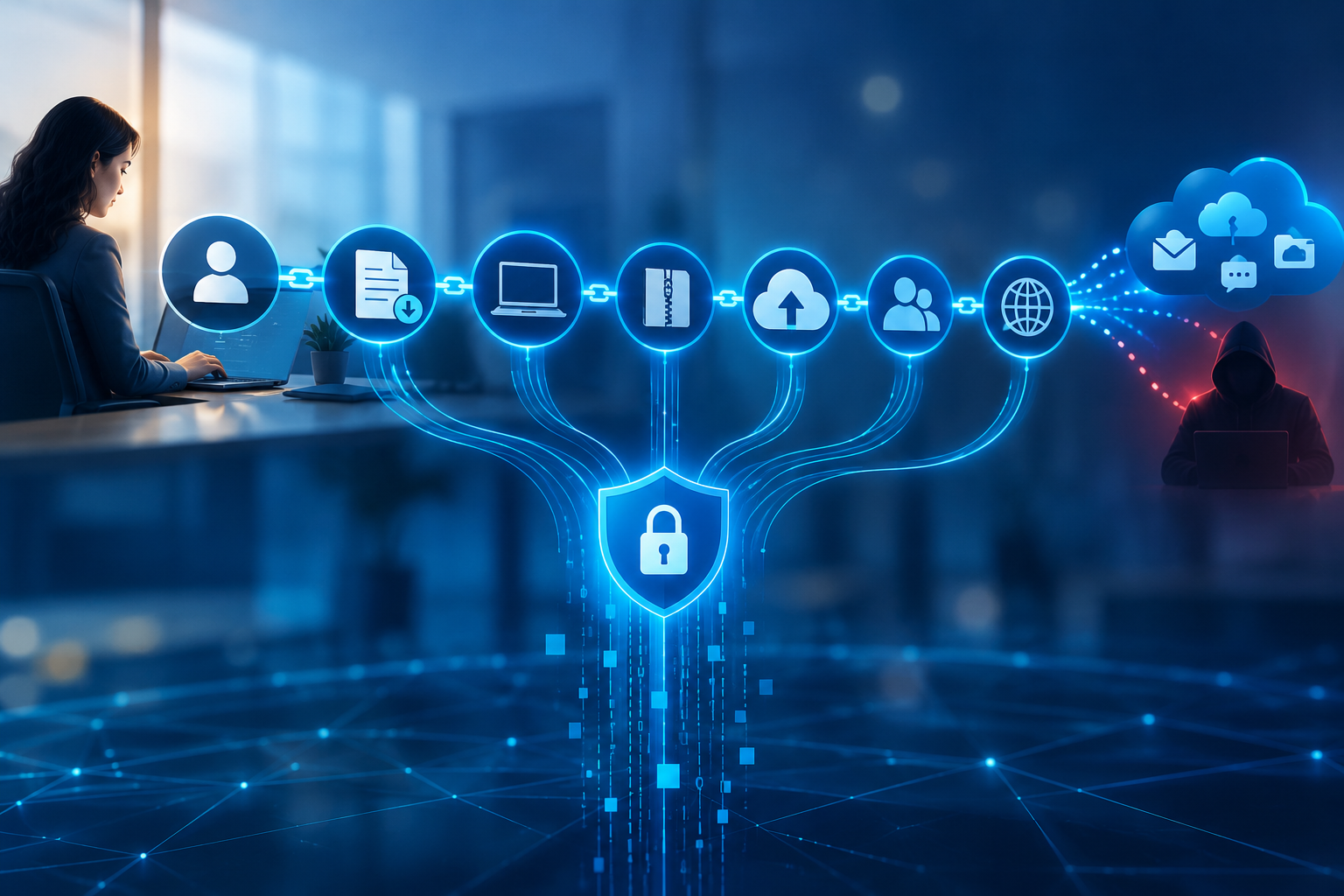
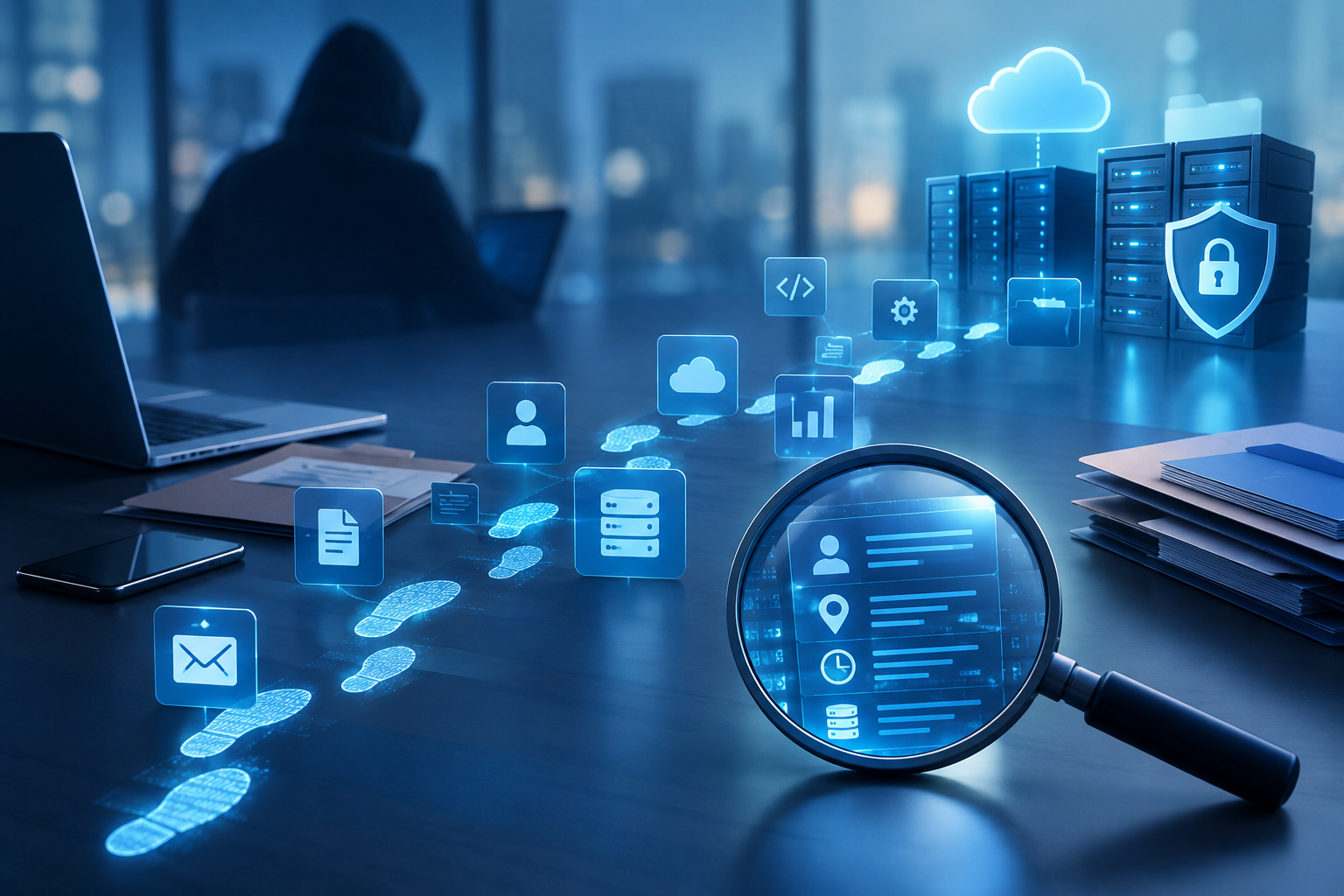
The Data Leakage Chain: Why a Single DLP Alert Rarely Tells the Whole Story Data loss rarely happens in a single moment. A sensitive document is not necessarily “lost” when it is uploaded, emailed, copied, or downloaded. In many cases, the actual leakage is the result of a chain of seemingly legitimate actions—each one appearing harmless in isolation, but collectively creating a path to data exposure. This is the Data Leakage Chain. From One Action to an Entire Exposure Consider a simple scenario. An employee with legitimate access downloads a customer dataset for business purposes. The file is copied to a local endpoint, compressed, uploaded to a cloud application, and later shared with an external account. A traditional DLP solution may generate an alert when the file is uploaded externally. But what happened before that alert? Identity → Access → Data → Endpoint → Application → Transfer → External Destination Every stage provides context. If security teams investigate only the final event, they may miss the circumstances that made the leakage possible in the first place. The Weakest Link May Not Be the Data Modern organizations have multiple data movement channels—email, cloud storage, collaboration platforms, APIs, SaaS applications, removable media, browsers, messaging applications, and increasingly, AI tools. This creates a challenge for traditional DLP approaches. Blocking one transfer channel does not necessarily prevent the underlying data movement. The focus therefore needs to shift from: “Did sensitive data leave?” to: “How did the data move, who moved it, why did it move, and where did it go?” Connecting the Dots Effective data protection requires correlation across multiple security signals. A suspicious event becomes more meaningful when combined with: • Identity: Who accessed the information? • Privilege: Was the access appropriate for the user's role? • Data sensitivity: What type of information was involved? • Behavior: Was this activity consistent with normal patterns? • Endpoint: From which device did the activity originate? • Application: Which application or service handled the data? • Destination: Where was the information ultimately sent? • Context: Was there a legitimate business requirement? This approach transforms DLP from a rule-based blocking mechanism into a broader data movement intelligence capability. The Future of DLP Is Context The next generation of data protection will increasingly depend on understanding relationships between events rather than treating every event independently. A single download may be normal. A single upload may be normal. A single external share may be normal. But when the same user downloads a highly sensitive dataset, moves it to an unmanaged device, processes it through an unauthorized application, and subsequently shares it externally—the chain tells a very different story. DLP should therefore not only ask whether data is leaving the organization. It should understand the journey of the data. Because the most important DLP alert may not be the final event. It may be the first link in the chain.