

 TRUPTI THAKUR
 #CyberSecurity #InformationSecurity #AISecurity #DataSecurity #ISO27001 #RiskManagement #AI Governance
Beyond Your Access Control !!

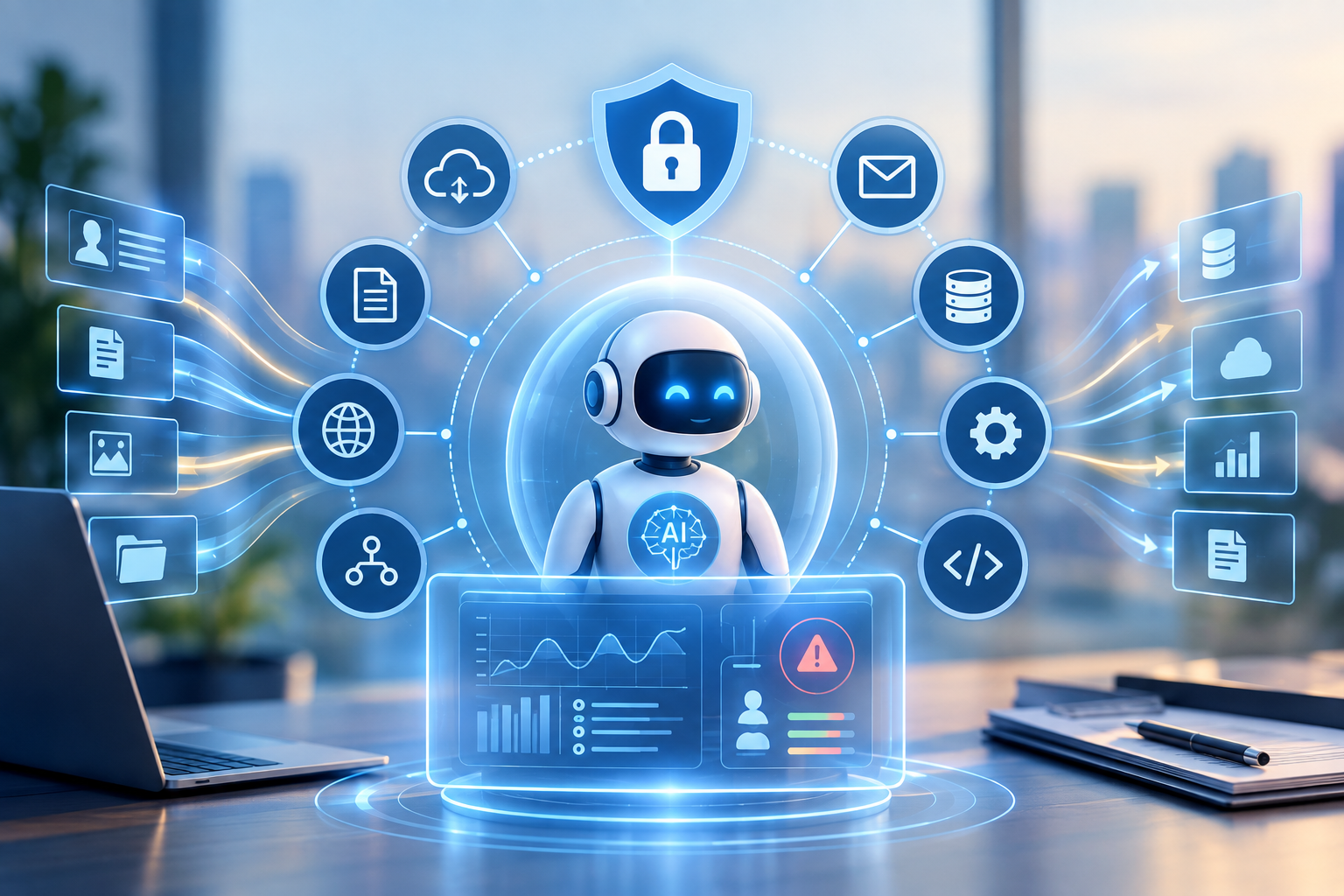
Beyond Access Control: Why Organizations Must Govern What AI Does, Not Just What It Can Access Introduction Traditional information security has largely focused on controlling who can access data, systems, and applications. Organizations implement role-based access control, multi-factor authentication, least-privilege principles, and monitoring mechanisms to ensure that only authorized users can access sensitive resources. However, the growing adoption of AI agents and autonomous AI systems introduces a new security challenge: authorized access does not always guarantee safe actions. An AI system may have legitimate access to confidential documents, customer records, internal applications, or business workflows. Yet, it could still share sensitive information with an unintended recipient, modify critical records, execute an unauthorized transaction, or trigger an inappropriate workflow because of misleading instructions, manipulated inputs, or poorly defined operational boundaries. This creates a critical shift in information security: organizations must move beyond controlling what AI can access and start governing what AI is permitted to do. The Emerging Gap Between Access and Action Access control answers an important question: Is this AI system allowed to access this resource? But in an increasingly automated environment, another question becomes equally important: Is this AI system allowed to perform this specific action under these circumstances? Consider an AI assistant integrated with an organization's email platform, document repository, and customer relationship management system. It may be authorized to read customer information and draft emails. However, that permission should not automatically allow it to send confidential information externally, change customer records, or initiate financial transactions without additional checks. The risk becomes more significant when AI systems interact with multiple applications, use external tools, or execute multi-step tasks with limited human supervision. A single inappropriate action can trigger a chain of events before anyone recognizes the problem. Traditional access controls remain essential, but they do not independently address every risk associated with AI-driven decisions and actions. Why Traditional Security Controls Are Not Enough Several factors make AI action governance increasingly important: 1. Excessive Operational Autonomy AI agents may perform multiple actions in sequence to achieve a defined objective. If operational boundaries are unclear, an agent may take actions that technically fall within its permissions but exceed the organization's intended risk tolerance. 2. Prompt Injection and Manipulated Inputs Malicious instructions embedded in documents, emails, or web content can influence an AI system's behavior. If the system does not adequately distinguish untrusted content from authorized instructions, it may attempt actions that conflict with organizational security requirements. 3. Permission Misuse Without Credential Compromise A conventional security incident often involves stolen credentials or unauthorized access. AI-related incidents may occur even when credentials are valid and permissions are correctly configured. The problem may lie in how authorized capabilities are used. 4. Limited Visibility Into AI Actions Organizations may monitor user logins and system access while overlooking the decisions, tool calls, data transfers, and changes initiated by AI agents. Without sufficient logging and traceability, investigating an incident or demonstrating control effectiveness becomes difficult. Building an AI Action Governance Framework Organizations should complement existing identity and access management controls with a structured approach to AI action governance. Define permitted actions and boundaries: Establish clear rules for which actions an AI system may perform independently, which require human approval, and which are strictly prohibited. Apply risk-based approvals: Require additional authorization for high-impact activities, such as external data sharing, privileged configuration changes, financial transactions, and deletion of critical information. Enforce least privilege at the action level: Limit not only the data and systems available to an AI agent but also the operations it can perform within them. Read-only access, for example, should remain separate from permission to modify or transmit information. Implement continuous monitoring: Record relevant AI decisions, tool calls, approvals, data movements, and resulting changes. Monitoring should help identify unusual behavior and support timely intervention. Establish accountability and incident response: Assign clear ownership for AI systems, define escalation procedures, and establish mechanisms to suspend or restrict an agent when suspicious or unsafe activity is detected. Test controls under realistic conditions: Evaluate AI systems against prompt injection, unauthorized actions, sensitive-data disclosure, and unintended workflow execution scenarios before deployment and following significant changes. Aligning AI Action Governance With ISO/IEC 27001:2022 AI action governance can also strengthen an organization's Information Security Management System (ISMS). ISO/IEC 27001:2022 provides a risk-based framework for identifying, assessing, treating, and monitoring information security risks. Relevant controls include access control (Annex A 5.15), identity management (5.16), authentication information (5.17), access rights (5.18), logging (8.15), monitoring activities (8.16), and information security in the use of cloud services (5.23), where applicable. Organizations should assess AI-related risks within their existing risk assessment and risk treatment processes, determine applicable controls, and maintain evidence that safeguards operate effectively. The precise control selection should reflect the organization's context, AI use cases, contractual obligations, and risk assessment. Importantly, compliance should not be treated as a documentation exercise alone. A policy stating that AI must not disclose confidential information is insufficient unless technical safeguards, monitoring, approval mechanisms, and incident response procedures support that requirement. Conclusion As AI systems evolve from passive assistants into agents capable of making decisions and executing tasks, information security must evolve alongside them. Controlling access remains fundamental, but it represents only one layer of protection. Organizations must also establish clear operational boundaries, govern consequential actions, monitor behavior, and maintain accountability for AI-driven outcomes. The future of AI security will depend not only on who—or what—can access information, but also on what it is allowed to do with that access. Organizations that integrate action-level governance into their cybersecurity and compliance frameworks will be better positioned to adopt AI responsibly while protecting sensitive information, maintaining operational trust, and demonstrating security control effectiveness.