

 TRUPTI THAKUR
 #CyberSecurity #DataSecurity #ThirdPartyRiskManagement #SupplyChainSecurity #ISO27001 #InformationSecurity #DataBreach #CloudSecurity #RiskManagement #CyberResilience
One Vendor- Thousand's of Risks
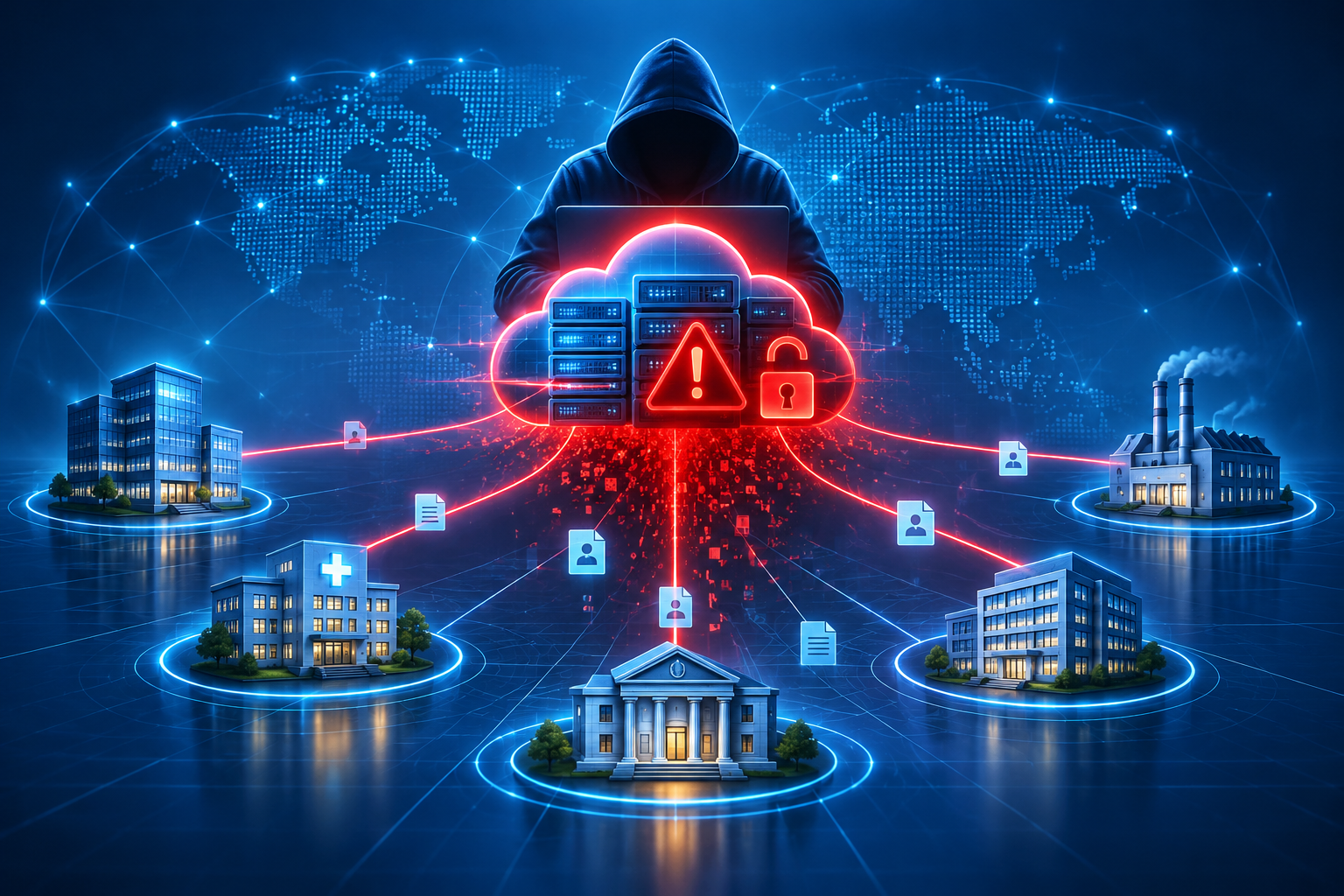
How a Single Third-Party Security Failure Can Trigger a Widespread Data Breach In today's interconnected digital ecosystem, organizations increasingly depend on third-party service providers for cloud hosting, data storage, payment processing, customer relationship management, identity management, and business operations. While these centralized platforms improve efficiency, scalability, and operational convenience, they also introduce a significant cybersecurity challenge: a single security failure at one service provider can expose the sensitive information of thousands of customers and multiple organizations simultaneously. Unlike traditional cyberattacks that target individual organizations, attacks on centralized data platforms can create a much wider impact. When attackers compromise a trusted vendor, they may gain access to interconnected systems, shared databases, customer records, business applications, and confidential organizational information. The Growing Risk of Centralized Data Platforms Modern businesses rarely operate independently of external technology providers. From cloud service platforms to SaaS applications and outsourced IT infrastructure, organizations continuously exchange and process information through third-party environments. This interconnected model creates a concentration of risk. A single vendor may maintain access to sensitive information belonging to hundreds of clients. If its security controls are inadequate, attackers can potentially exploit that centralized access to compromise multiple organizations through one entry point. The risk becomes even greater when organizations assume that their vendors have sufficient security measures without independently evaluating their cybersecurity practices. How One Vendor Breach Can Impact Multiple Organizations A third-party compromise can create a chain reaction across the digital ecosystem. Some common attack scenarios include: Compromised Vendor Credentials: Attackers steal privileged credentials and use legitimate access to retrieve customer or organizational information. Cloud Misconfigurations: Improperly configured storage, databases, or access permissions expose sensitive information to unauthorized individuals. Software Supply Chain Attacks: Malicious code introduced through a trusted vendor's software updates or integrations can affect multiple customers. Insecure API Integrations: Weak authentication, excessive permissions, or inadequate authorization controls allow attackers to access interconnected systems. Centralized Data Exposure: A breach involving a shared platform or database can expose records belonging to multiple customers and business entities. The most concerning aspect is that the affected organizations may not even be aware that their information is being accessed through a compromised service provider. Why Traditional Security Measures Are Not Enough Many organizations invest heavily in firewalls, endpoint protection, intrusion detection, and internal security monitoring. However, these controls may not adequately address risks originating from external service providers. A vendor can become an entry point into an organization's digital environment if third-party access is not properly governed. Even when internal systems remain secure, sensitive information processed or stored by external platforms may still be exposed. This highlights the need to move beyond traditional perimeter-based security and adopt a broader approach that considers the entire technology and service ecosystem. Strengthening Security Against Third-Party Breaches Organizations must treat vendor security as an integral part of their information security strategy rather than a routine procurement requirement. Some essential measures include: Comprehensive Vendor Risk Assessments: Evaluate vendors before onboarding and periodically reassess their security posture, certifications, vulnerabilities, and compliance obligations. Access Control and Privilege Management: Apply least-privilege principles, restrict vendor access to necessary resources, and implement Multi-Factor Authentication (MFA). Continuous Security Monitoring: Monitor third-party connections, API activities, privileged access, unusual data transfers, and suspicious system behaviour. Data Protection and Encryption: Ensure sensitive information is encrypted during transmission and storage, with appropriate key management and access restrictions. Contractual Security Requirements: Establish clear obligations relating to data protection, breach notification, security assessments, audit rights, subcontractor management, and incident response. Third-Party Incident Response Planning: Define responsibilities, communication channels, escalation procedures, and recovery arrangements for incidents involving external service providers. The Role of ISO 27001 in Managing Third-Party Risks ISO/IEC 27001:2022 provides a structured approach to managing information security risks associated with external parties and supplier relationships. Controls such as A.5.19 (Information Security in Supplier Relationships), A.5.20 (Addressing Information Security Within Supplier Agreements), A.5.21 (Managing Information Security in the ICT Supply Chain), and A.5.22 (Monitoring, Review and Change Management of Supplier Services) help organizations establish appropriate security expectations, assess supplier risks, and continuously monitor third-party relationships. However, compliance should not be treated as a one-time exercise. Organizations must ensure that supplier security controls remain effective throughout the entire business relationship. Conclusion: Your Security Is Only as Strong as Your Extended Ecosystem The growing dependence on centralized data platforms has changed the nature of cybersecurity risks. A security failure at one service provider can potentially become a business-wide incident affecting multiple organizations, customers, and stakeholders. Organizations must recognize that information security does not end at their own network boundaries. It extends to every vendor, cloud platform, software provider, API integration, and external entity that handles their data. The real question is no longer just whether your organization is secure, but whether the entire ecosystem trusted with your data is equally secure. In an interconnected digital world, managing third-party risk is not optional; it is a fundamental requirement for building cyber resilience and maintaining trust.